

Notes on the Intellectual
(after Said and Carson)

This is the transcript used in a lecture I gave on the occasion of my birthday reading the General Intellectual Conference at Sleeping Village on April 1st. It was revised and pulled from a lecture I gave at the 2026 College Art Association.
Part I: A hum, a lean, and a stone
Let’s begin circuitously. While this is a talk on the intellectual we should begin with a hum and a lean. It’s how I began another talk at the only “proper” conference I’ve ever attended as a speaker, the College Art Association. First things first then. I began there by asking everyone to hum, and I’d like to ask you all to do that now.
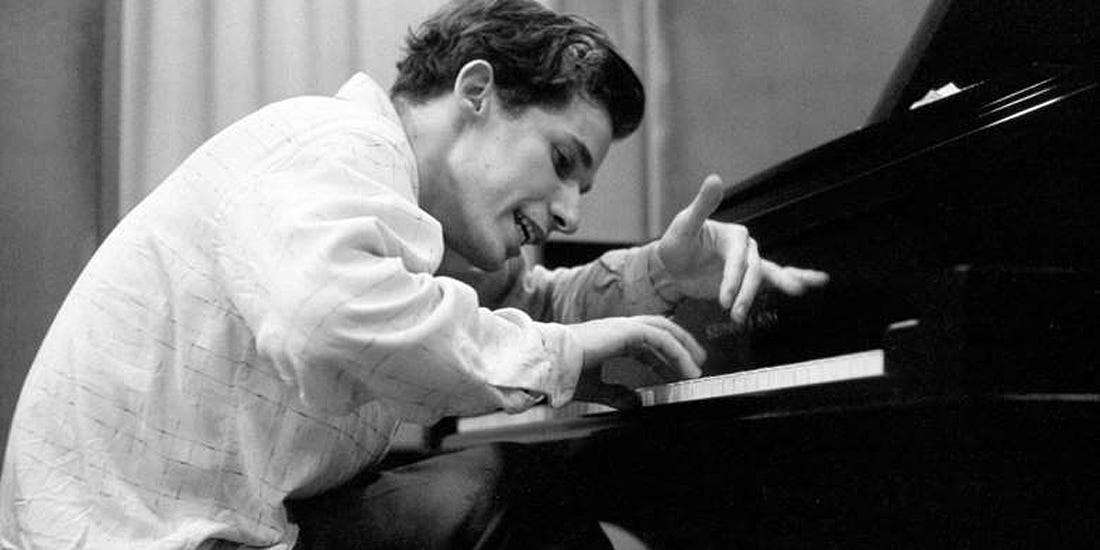
Our intellectual hums. The humming you can imagine, our beginning hums, arrives here by a circuitous route. I turn to one of Said’s late writings on Glenn Gould’s late work called The Virtuoso as Intellectual in which he discusses the high degrees of pleasure Gould could extract in his playing and how it contributed to what Said, following from Maynard Solomon’s thoughts on Beethoven, referred to as new kinds of thinking. In particular, Gould’s idea of “asserting that an ‘ultimate joy’ was contained in the effort to produce an ‘exuberant and expansive effort at re-creation’ in performance.”1 That’s what brought me back to the humming I hear and enjoy when I listen to Gould’s The Art of the Fugue on my bus rides. His hum, the piano, the people on the bus, the engine humming along.
Gould hummed reflexively while playing and its use is a kind of thinking. Gould was not fond of his own humming and often worked with sound engineers to try to erase it. And yet the artifact of a bodily gesture resisted these technologies of edited presentation.
This hum found on some of his tracks, barely audible behind the piano, divides his listeners. Some love its humanity, others see it as noise distracting from the purity of the piano’s sound. And yet it is regardless a physical, vibratory expression of joy in thinking. The hum is supposedly distracting, and yet the hum is the thought and the point. The hum is joyful thinking. It appears in the quieter moments of his playing, the silences; to further complicate and extend this thought here is an extended quote from Moten’s essay Chromatic Saturation,
We study our seaborne variance, sent by its prehistory into arrivance without arrival, as a poetics of lore, of abnormal articulation, where the relation between joint and flesh is the pleated distance of a musical moment that is emphatically, palpably imperceptible and therefore exhausts description. Having defied degradation, the moment becomes a theory of the moment, of the feeling of a presence that is ungraspable in the way that it touches. Such musical moments—of advent, of nativity in all its terrible beauty, of the alienation that is always already born in and as parousia, of the disruption in duration of the very idea of the moment—are rigorous performances of the theory of the social life of the shipped, given in the terror of enjoyment and its endlessly redoubled folds. If you take up the hopelessly imprecise tools of clocks, and tables of damned assurance, you might stumble on such a moment about two and a half minutes into another Cherry and Blackwell’s duet called “Mutron.” You’ll know the moment by how it requires you to think the relation between fantasy and nothingness: what is mistaken for silence is, all of a sudden, transubstantial.2
Elsewhere when Moten gave this essay as a lecture, he referred to that Cherry and Blackwell timestamp as the moment that makes you lean. This is the lean which accompanies the hum. It is intellectual thought as bodily expression.
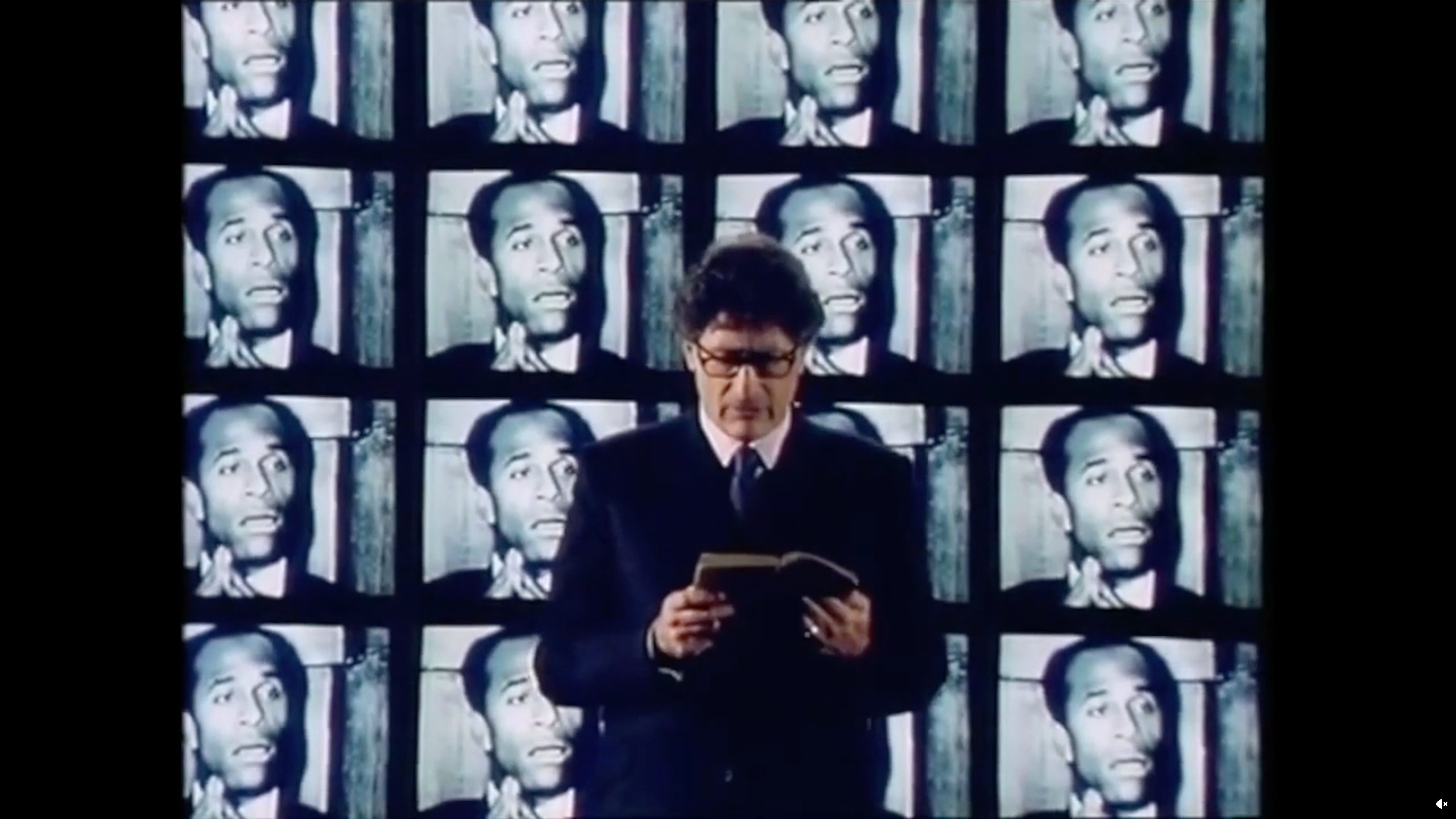
In 1992 Said was invited by the BBC to present the 1993 Reith Lectures. This announcement was quickly followed by a small, but persistent group of critics who argued that he could not be trusted to present through such a sober and respectable platform for the presentation of ideas as he was deeply invested in the fight for Palestinian Rights. As he notes in the introduction to the book version of these lectures, “This was only the first in a series of of plainly anti-intellectual and antirational arguments, all of them ironically supporting the thesis of my lectures about the public role of the intellectual as outsider, ‘amateur,’ and disturber of the status quo.”3 These early criticisms were followed as well by arguments that the very topic of the intellectual was itself “un-English” to talk about and had associations with the ivory tower. Immediately Said was declared both too passionate to be able to speak as an intellectual, and too elite to be able to speak to the public because he spoke of the intellectual. And yet the intellectual Said speaks of is one and the same with the one I speak of here, they who hum and lean in thought, those who are inextricable from the public and the bodied politic.
This is not the first or the last time Said’s investments in the Palestinian cause would result in criticisms of him or the call for him to be removed from speaking. One of the final ones that happened to him in his life was his disinvitation from speaking at the Freud Society of Vienna after images were circulated of his joining in with a group he was a part of in symbolically throwing a stone at an Israeli Occupation Forces Guard Tower at the Lebanese Border. This was for Said an intellectual act, if I can extrapolate so much, and as the writer Stephen Sheehi argues in Theory as Stone, it was inexcusable not because he did it, but because it too intensely linked him with the land, declared him as a native, on a land that ideologically has been twisted to “belong” to Israeli Settlers. And as Johann August Schülein, the head of the Freud Society, notes in his reasoning for why Said had been disinvited he states that the members couldn’t accept that an engaged Palestinian had been invited, one who throws stones at Israeli soldiers, which of course we know he did not do, in this instance.
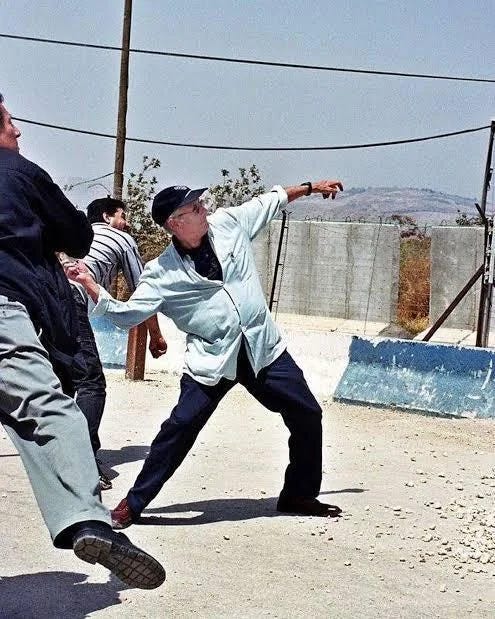
This disinvitation, however, resulted in him being invited to speak at the Freud Museum in London where he presented one of his late lectures titled Freud and the Non-European. This lecture, which I will not attempt to distill fully here, essentially works as a response by Said to, not so much argue against the disinvitation, but rather to frustrate the idea of some essentialized and stable notion of identity required by the ideological tinge of those members of the board of the Freud Society of Vienna in their arguments.
Said then gives to us a figure of the intellectual who doesn’t wish to be absolute on matters, or work for an institution which would guide their thought, but rather as what Antonio Gramsci would call an “organic intellectual.” He quotes Gramsci on this early in his Reith Lectures, and articulates that this kind of intellectual is neither good nor bad, but contrary to intellectuals of orthodoxy they are directly involved in society. The intellectual can be crucial to both revolutionary and counterrevolutionary movements. He goes on to say that,
The central fact for me is, I think, that the intellectual is an individual endowed with a faculty for representing, embodying, articulating a message, a view, an attitude, philosophy or opinion to, as well as for, a public. And this role has an edge to it, and cannot be played without a sense of being someone whose place it is publicly to raise embarrassing questions, to confront orthodoxy and dogma (rather than to produce them), to be someone who cannot be easily co-opted by governments or corporations, and whose raison d’être is to represent all those people and issues that are routinely forgotten or swept under the rug.4
Elsewhere in his essay The World, the Text, and the Critic Said argues this same notion of the worldliness of the critic and the text and the power that comes from it, again for ill and for good. Following quoted selections from James Joyce’s Portrait of the Artist as a Young Man and Frantz Fanon’s Wretched of the Earth, the latter of which he follows with the sentence “No wonder that the Fanonist solution to such discourse is violence” Said writes that,
Such examples make untenable the opposition between texts and the world, or between texts and speech. Too many exceptions, too many historical, ideological, and formal circumstances, implicate the text in actuality, even if a text may also be considered a silent printed object with its own unheard melodies… My thesis is that any centrist, exclusivist conception of the text, or for that matter of the discursive situation as defined by Ricoeur, ignores the self-confirming will to power from which many texts can spring.5
Both Said’s notion of the intellectual and of the texts produced by writers and critics (who are also intellectuals) as members of the world, the public, is an intensely ethical one. How one chooses to be in the world as an intellectual, and for that matter, an artist, writer, educator, mathematician, engineer, politician, and so on and so forth, is necessarily engaged and difficult. He notes the importance of embarrassment, and while I will not extend this discussion here due to time I’d like to highlight this point’s relationship to the archetypal figures of the fool and the jester.
Intermission: A quick detour
A quick detour before I end with our second melodic through line of a complementary and contradictory notion of an intellectual (slight spoilers for both Martyr by Kaveh Akbar and Hamnet by Chloe Zhao, if you would like you can plug your ears and make noise for the duration):
In Akbar’s Martyr he includes the figure of Orkideh, an artist who knows she is dying and stops her treatment to spend the last of her days in the Brooklyn Museum speaking to the museum-goers about anything they’d like, but colored with the fact of death. In a chapter from her perspective she notes how the idea of art as ornament, as something which represents beauty as the endpoint, is a recent historical phenomena. She puts forth the idea that as our “ape brains” got too big we began to put all our extra knowing in “language, in art, in stories and books and songs. Art was a way of storing our brains in each other’s. It wasn’t until fairly recently in human history, when rich landowners wanted something pretty to look at in winter, that the idea of art-as-mere-ornament came around.” That isn’t what she’s interested in. I’ll quote another small section from Orkideh’s perspective in its entirety before I move to Hamnet:
What I want to say is that I was happy. Not always, not even mostly. But I did know real, deep joy. Maybe everyone gets a certain amount to use up over a lifetime, and I just used my lifetime’s allotment especially quickly, with Leila. But I don’t think it was a tragedy, my life. Tragedies are relentless. Nobody could ask for more than what I’ve had.6
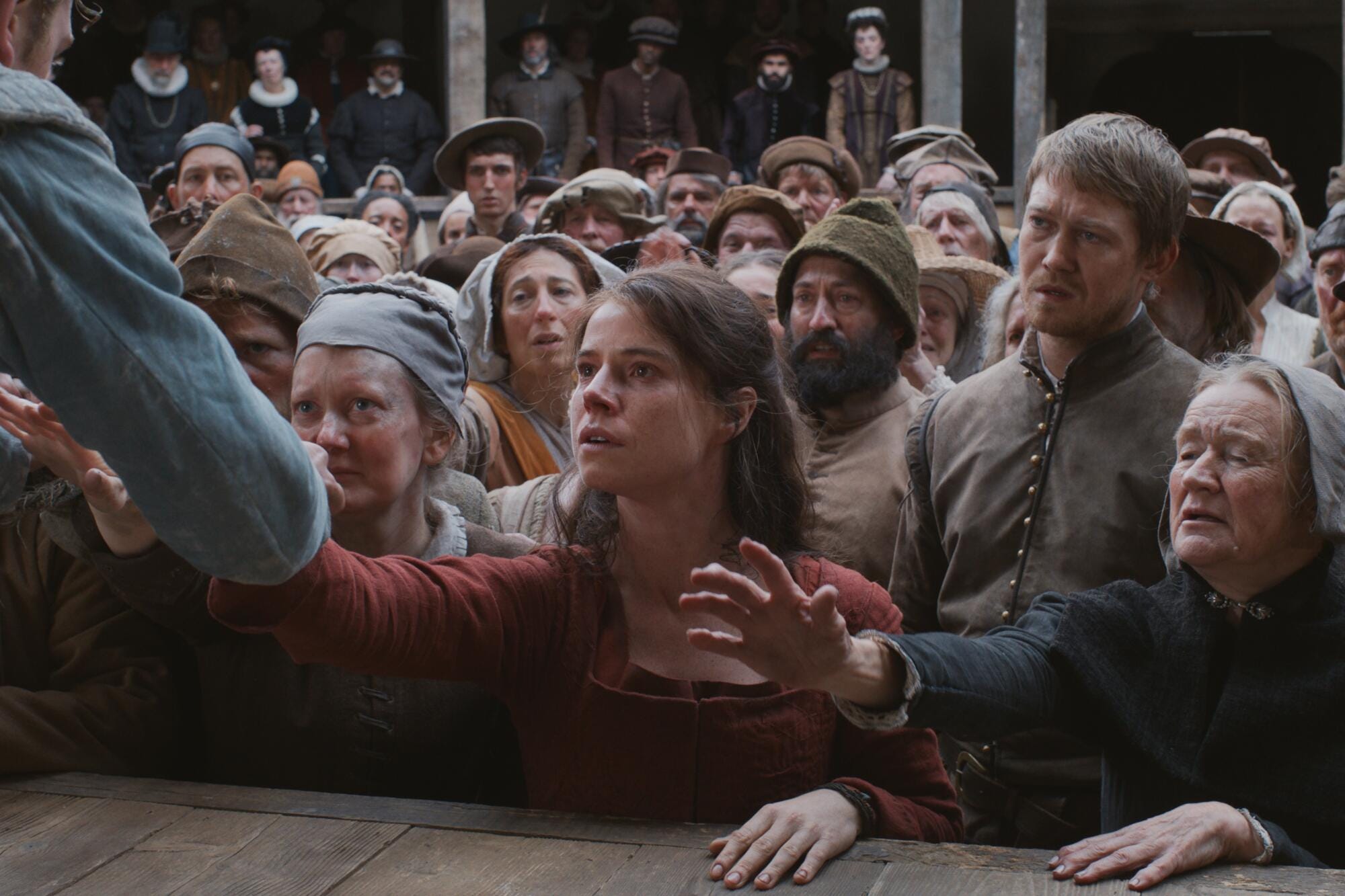
Focused on the real life tragedy surrounding Shakespeare’s creation of his play Hamlet, Chloe Zhao’s adaptation of Maggie O’Farrell’s book Hamnet, which is an attempt to bring back into discussion the real life death of Shakespeare’s son and its effect on the family, follows Agnes Hathaway through the part of her life between meeting Shakespeare and the moment when she sees the first production of Hamlet. Agnes is druidic and pagan in her relationship to the world, and finds her knowledge within nature. When she sees Hamlet for the first time she doesn’t fully know what she is seeing and is overcome with grief and emotion. You watch her watch the play unfold, both as a medium and a story. And it is towards the end, when she is witnessing what is, for her, a second death of a different kind of her son on stage she is so overcome with emotion she reaches across the threshold of the stage—that space where illusion and stagecraft becomes a different kind of truth—out towards the actor playing Hamlet as he delivers his final monologue. The actor stops in his track and a singular tear rolls down his cheek as following this different kind of emotional knowing, the rest of the crowd begins to reach out to him, to comfort this character in his dying. It is then that he reaches back out to the Globe Theatre, the world, and finishes his dying amongst it. Through the play Agnes and Shakespeare continue and share their grieving, but this time with the world.
Part II: The love of god
“Why should the truth not be impossible? Why should the impossible not be true? Questions like these are the links from which prayers are forged.”7 These sentences come from the fourth part of a three part essay by Anne Carson on three intellectual figures, Sappho, Marguerite Porete, and Simone Weil. The essay titled Decreation: How Women like Sappho, Marguerite Porete and Simone Weil Tell God which takes its main title from a concept by Weil, works through these three writers who she describes as follows:
Sappho: a Greek poet of the Seventh Century BC who lived on the island of Lesbos, wrote some famous poetry about love and is said to have organized her life around worship of the god Aphrodite.
Marguerite Porete: who was burned alive in the public square of Paris in 1310 because she had written a book about the love of God that the papal inquisitor deemed heretical.
Simone Weil: the twentieth century French classicist and philosopher whom Camus called “the only great spirit of our time.”8
Carson discusses each of these writers guided by Weil’s concept of decreation which, while never fully defined, could be understood as her program for getting the self out of the way. This fourth part which I am focusing on is Carson’s thinking through the contradiction at the heart of each of these women’s intellectual projects, namely that each speaks of the denials of self within, especially, the love of god, while working within the medium of writing. As Carson writes at the beginning of this section,
To be a writer is to construct a big, loud, shiny, centre of self from which the writing is given voice and any claim to be intent on annihilating this self while still continuing to write and give voice to writing must involve the writer in some important acts of subterfuge and contradiction.9
She follows with two quotes of Weil’s bridged by a sentence:
“Contradiction alone is the proof that we are not everything. Contradiction is our badness and the sense of our badness is the sense of reality. For we do not invent our badness. It is true.”
To accept the true badness of being human is the beginning of a dialectic of joy for Simone Weil:
“If we find fullness of joy in the thought that God is, we must find the same fullness in the knowledge that we ourselves are not, for it is the same thought.”10
The projects of these writers and their legacies are contradictory and complicated. Carson points out, for example, that Porete was burned for her heretical writing and referred to as a “fake woman” but her text was preserved by various clerics as a work of Christian mysticism, pulled away from her authorship until 1946.
The difficulty of these intellectual’s thoughts does not deny their importance or what they authorized in the name of their own self-annihilations. For Carson it is not in the literality of their work that the ideas spring from, but rather in many ways in their contradictions. It is that they each know what love is that endears Carson to them. They were in service of something bigger than themselves in their intellectual projects. Carson writes that, “We need history to remain ordinary. We need to be able to call saints neurotic, anorectic, pathological, sexually repressed, or fake.”11
If there is anything to be found in the figure of the intellectual it is what they choose to do in the world. Is there is something to be found in the intellectual—who, Gramsci points out in his Prison Notebooks is everyone, just not everyone in society has the function of an intellectual—it is perhaps that they are a model of being in the world and caring for it. Perhaps this is sentimental, but it is also the case that when one hums others can feel it, even if they can’t hear it.
Edward W. Said, “The Virtuoso as Intellectual,” in On Late Style, ed. Michael Wood (Bloomsbury, 2006), 125.
Fred Moten, The Universal Machine (Duke University Press, 2018), 199.
Edward W. Said, Representations of the Intellectual (Pantheon Books, 1994), x.
Said, Representations of the Intellectual, 11.
Edward W. Said, The World, the Text, and the Critic (Harvard University Press, 1983), 49-50.
Kaveh Akbar, Martyr! (Knopf Publishing Group, 2024).
Anne Carson, Decreation (Vintage Books, 2005), 178)
Ibid, 157.
Ibid, 171.
Ibid, 171-172.
Ibid, 180.